Winter in Huntersville is not severe, but it changes dog skin all the same. Heating systems run for months, indoor air dries out, coats grow heavier, and the dog who was fine in October is flaking and scratching by January. Owners often blame the cold. The bigger culprit is usually the dry indoor air the dog lives in most of the day, plus baths that get hotter and more frequent as mud season overlaps.
Groomers at The Doggie Barber see the pattern every year: winter coats arriving thick, staticky, and dry at the skin. Here is the season laid out, and what helps in each stretch of it.
Why winter dries skin out
Heated indoor air holds less moisture against the skin, so water leaves the coat and skin faster. Static builds, loose coat clings instead of shedding cleanly, and small flakes appear along the back, especially visible on dark coats. Add road salt and grit on paws during the occasional ice or snow event, and winter care becomes two jobs: moisture for the skin, and rinsing for the feet.
Not every winter flake is dry air. Flaking with redness, odor, hair loss, or relentless scratching earns a vet visit in any season. Plain dryness is dull, flaky, and mildly itchy at worst, and it improves when the routine below is applied for a few weeks.
| Stretch of winter | What changes | What to do |
|---|---|---|
| Late fall, heating starts | Indoor air dries; coat thickens | Brush more often to move oils through the coat; check skin weekly |
| Deep winter | Peak dryness, static, mud and grit | Lukewarm baths only; rinse paws after salted walks; humidifier near the dog's sleeping area if practical |
| Ice or snow events | Salt and grit on paws and belly | Rinse or wipe paws and belly the same day; check between toes for packed grit |
| Late winter, first warm spells | Undercoat starts to loosen | Book a bath and blow-out to clear loose undercoat before spring shedding peaks |
Bathing in winter: warmer is not better
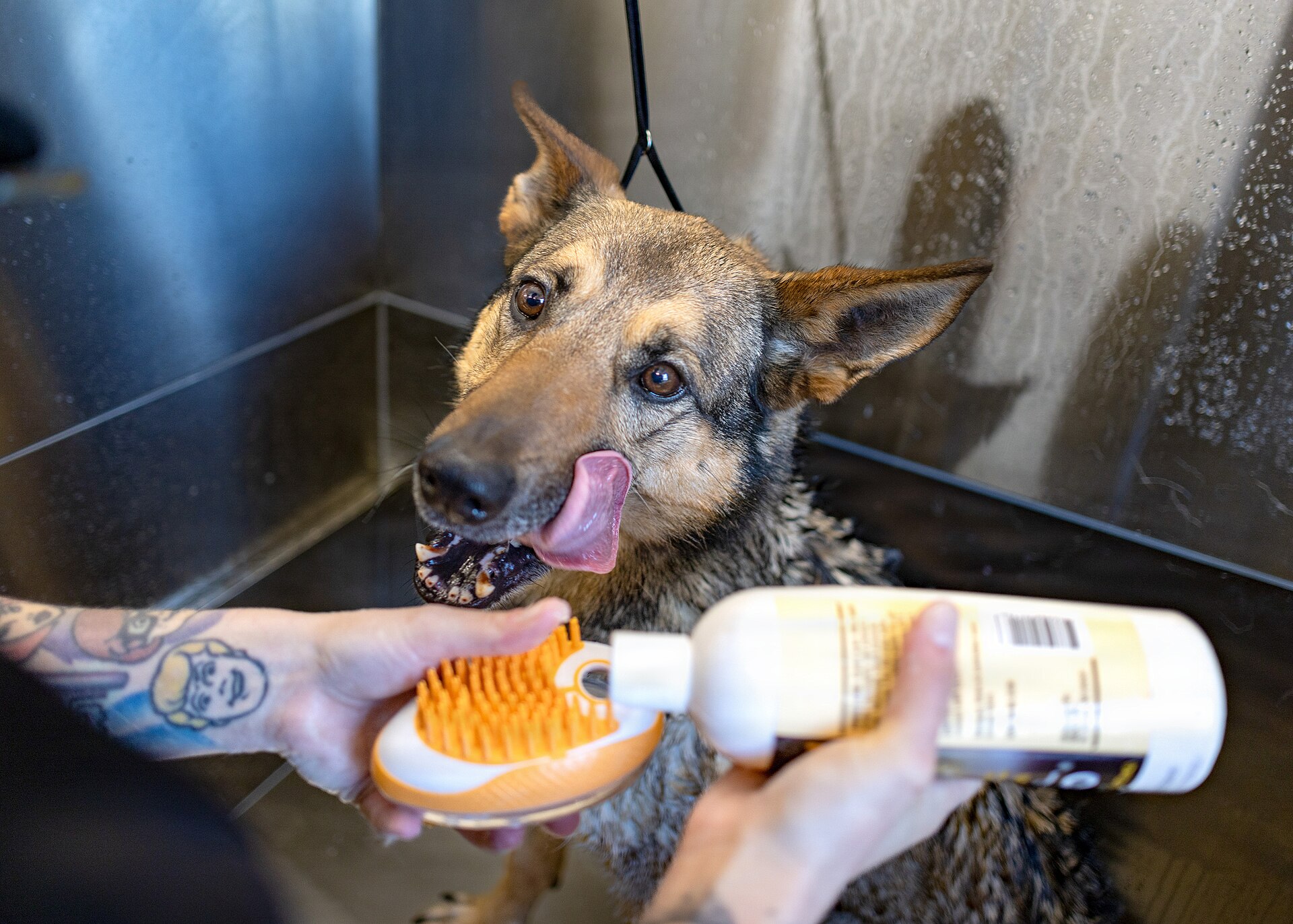
The most common winter mistake is the hot bath, given with good intentions. Hot water strips coat oils faster than lukewarm water and leaves dry skin drier. Keep winter baths lukewarm, use a mild product, rinse thoroughly, and dry the coat fully; a damp undercoat in a heated house feels warm but mildews and mats. Dogs with heavy winter coats may need the salon's dryers to finish the undercoat properly, which is a practical reason winter is a good season to keep grooming appointments rather than stretching them.
Between baths, brushing is the moisture tool you already own. Brushing spreads the coat's natural oils along the hair shaft, lifts out flakes and loose coat, and lets you feel the skin underneath for dryness or bumps. Short, frequent sessions beat one long monthly battle, especially for dogs who tolerate grooming in small doses.
Paws, ears, and the rest of winter
Paws take the season's punishment: cold pavement, grit, and de-icing salt that dogs then lick off. Rinse or wipe paws after walks on treated surfaces, keep the hair between the pads trimmed so grit and ice do not pack in, and watch for cracking, which deepens if a dog keeps licking. Ears need a winter glance too, since dogs who shake off dry skin and debris can still build up wax unnoticed; groomers check ears as part of a full groom and will flag anything that looks inflamed.
By late winter, plan ahead: a thorough bath, blow-out, and brush as the coat turns sets the dog up for spring, when Piedmont pollen arrives and the whole routine starts again on a new problem.
Food, water, and the background basics
Skin health rides on basics that are easy to overlook in winter. Dogs drink less when water is cold and the house is dry, so keep fresh water available and notice if the bowl level barely moves. A complete diet suited to the dog supports coat oils from the inside; sudden diet changes in mid-winter add a second variable when you are trying to judge dry skin. Keep the routine boring and steady, change one thing at a time, and give each change a few weeks before you judge it.
Common questions
Should I bathe my dog less in winter?
Not necessarily less, but gentler: lukewarm water, mild products, and full drying. Skipping baths entirely lets dry skin, flakes and loose coat build up for months.
Is a humidifier worth it for the dog?
It helps the whole household's skin in heating season. Place it where the dog sleeps, keep it clean, and treat it as support, not a cure for real skin problems.
When is winter flaking a vet problem?
When it comes with redness, odor, hair loss, sores, or scratching that disturbs sleep. Plain dryness is dull and flaky but mild, and improves within a few weeks of routine changes.
Photos in this guide are representative stock images.
← All guides from The Doggie Barber← Back to The Doggie Barber