A puppy's first groom sets the template for every groom that follows. Dogs who learn early that the salon means handling, strange sounds and a bath, in short and kind doses, become adults who walk in calmly. Dogs whose first groom is a full, overdue rescue on a matted six-month-old coat learn the opposite lesson in one afternoon. The difference is timing, and the timing is earlier than most owners think.
The window opens as soon as a puppy's vaccinations allow safe visits, commonly around ten to sixteen weeks, and the first appointments should be small: a bath, a tidy of face and feet, nails, and home again before the puppy's patience runs out. This guide walks the first year, from the first bath at home to the first full groom in a Huntersville salon.
Start handling at home, weeks before the salon
Grooming tolerance is built on the couch, not the grooming table. Touch the puppy's paws, spread the toes, lift the ears, look at the teeth, and brush for thirty seconds, daily, paired with treats and calm praise. Run an electric toothbrush (off, then on, nearby) to simulate clipper sound and vibration, and let the puppy investigate it like furniture.
These tiny sessions teach the single lesson the salon depends on: being handled by the ears, feet and face is normal, brief and followed by good things. Puppies who get this groundwork arrive at their first appointment already fluent in the basics, and the groomer spends the visit bathing and trimming instead of persuading.
The first salon visits, in order
- Visit one: bath and tidy. A bath with gentle puppy-safe products, a blow-dry introduction, nails trimmed, ears checked, and a light tidy of the face, feet and sanitary area. Short and positive is the whole goal.
- Visit two: sounds and table time. The puppy repeats the bath routine and meets clipper and dryer sounds at working distance, still with minimal cutting. Confidence compounds across visits.
- Visit three: the first real trim. With handling and sounds familiar, the groomer completes a full puppy trim. The coat is still puppy-soft and forgiving, which makes it the right canvas for a first style.
- Then: settle into the breed rhythm. From the first birthday, the dog graduates to the adult schedule for its coat type: four to six weeks for growing coats, six to eight for double coats.
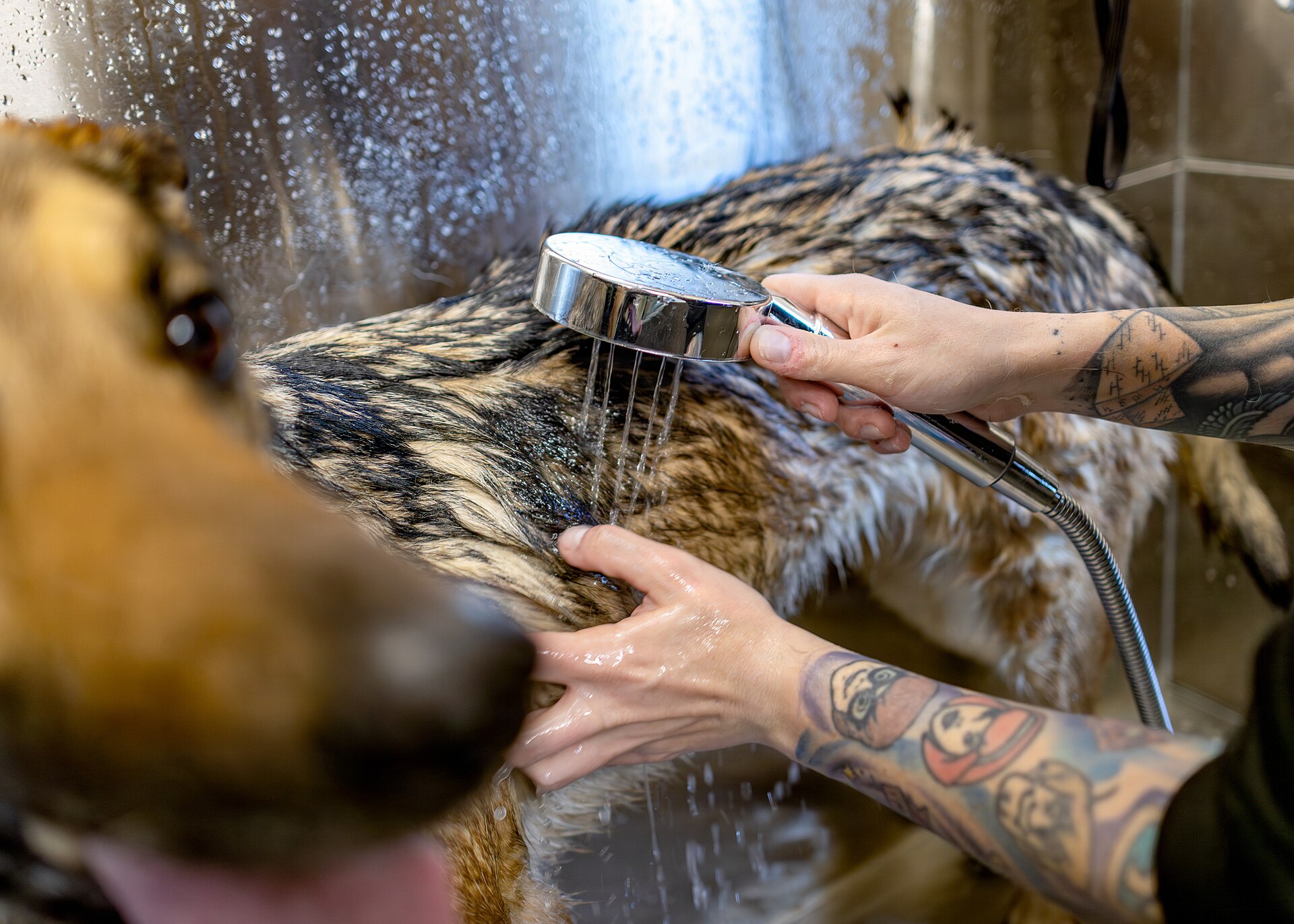
Notice what is missing: any expectation that a twelve-week-old puppy stands like a statue for a two-hour groom. Professional groomers build first visits around the puppy's attention span, and a salon that insists on a full groom for a first-timer is telling you something about its priorities. Ask what their puppy introduction looks like before you book.
Coat change: the matting trap of month six to twelve
Somewhere between six and twelve months, most coated breeds swap puppy coat for adult coat, and the two grow through each other and tangle at the skin. Owners who sailed through the first grooms get blindsided: the dog that never matted is suddenly felted at the ears and chest. This is the most common moment for a first humane reset clip, and it is nobody's failure of character; it is biology arriving on schedule.
The counter is frequency. During coat change, brush more often (daily for Doodles and Poodles), verify with a comb, and consider shortening the groom interval by a week or two until the adult coat is established. Keeping the coat a little shorter through the transition is a legitimate strategy, not a surrender: a manageable coat you can maintain beats a long one you cannot, every single time.
Choosing the first groomer
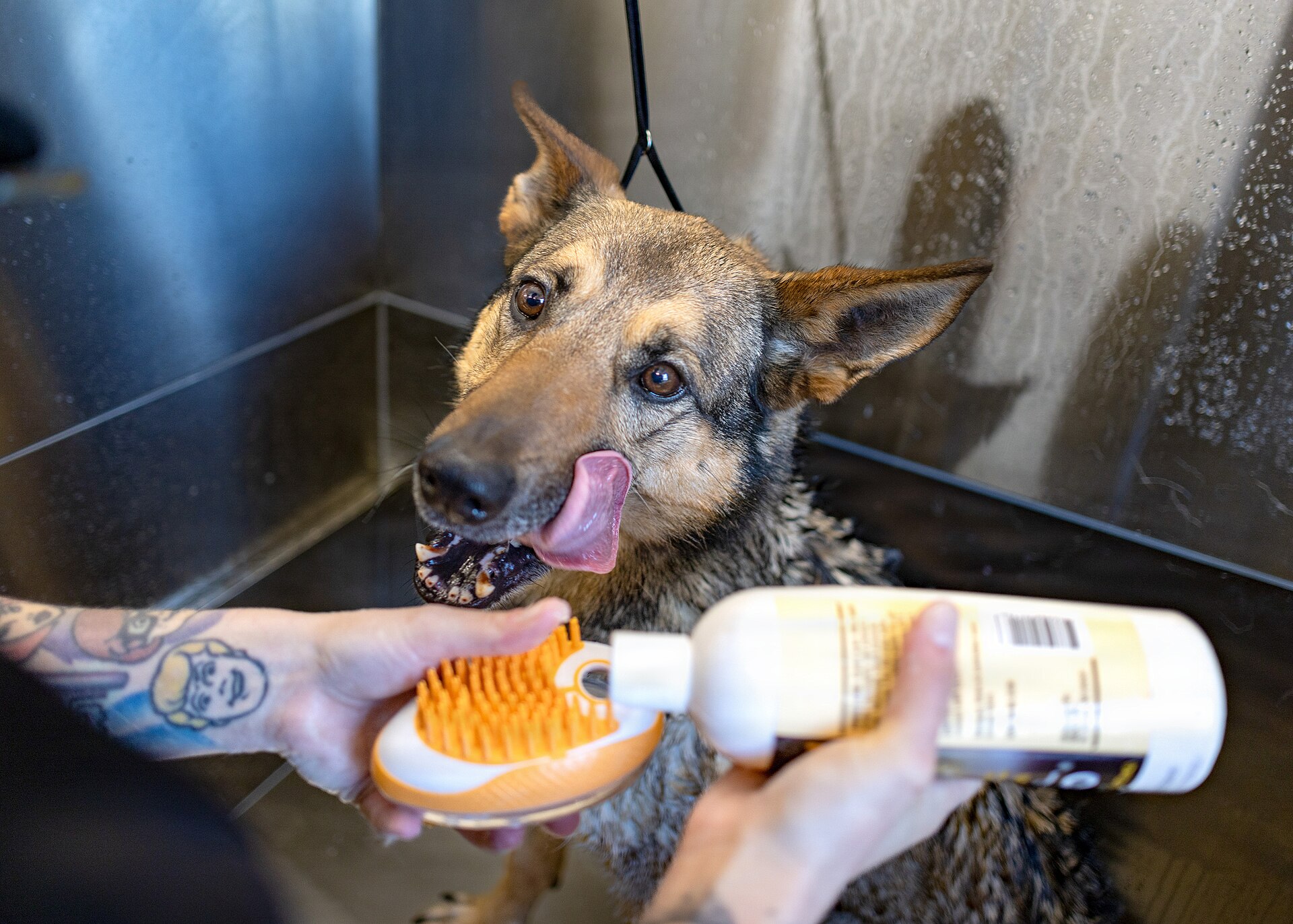
Ask three questions. Do they take puppies in short introductory visits? Will they stop a service rather than force a frightened puppy through it? What products do they use on young or sensitive skin? A salon that answers patiently is showing you its working style. Natural, gentle products matter for puppies because their skin is thinner and they will mouth at their own coat afterward.
Then keep the rhythm. Puppies groomed on a steady schedule become the easiest adults on a groomer's book, and the dog who trots into The Doggie Barber like it owns the place at age three is simply a dog whose first visits at four months were short, kind and boring. Boring is the goal. Excitement is for the ride home.
Common questions
When should a puppy have its first groom?
Book an introductory visit once your veterinarian says the puppy's vaccinations allow it, commonly around ten to sixteen weeks. Start with a short bath-and-tidy rather than a full groom, and build up over two or three visits.
What if my puppy is scared at the groomer?
Short, positive visits are the fix: bath, nails and a light tidy, then home before patience runs out. A good groomer will stop rather than force a frightened puppy. Handling practice at home (paws, ears, teeth, brushing with treats) between visits speeds the process considerably.
Why did my puppy's coat suddenly start matting?
Coat change. Between about six and twelve months the adult coat grows through the puppy coat and the two tangle at the skin. Brush daily during this phase, verify with a comb, and shorten the grooming interval until the adult coat is established.
Photos in this guide are representative stock images.
← All guides from The Doggie Barber← Back to The Doggie Barber