Some dogs treat the grooming salon as a spa day. Others shake in the car park. Grooming anxiety is common, mostly manageable, and almost never a character flaw in the dog or a failure by the owner. It is usually a history: a dog who was groomed late, fast and matted the first time, a rescue with no grooming history at all, or a temperament that finds noise, water and handling by strangers to be a lot, all at once.
The encouraging fact is that anxious dogs improve predictably when the variables are handled in the right order: health first, then environment, then training, then scheduling. This guide walks that order for Huntersville owners, including the honest cases where anxiety needs a veterinarian's help and not just a patient groomer.
First, rule out pain
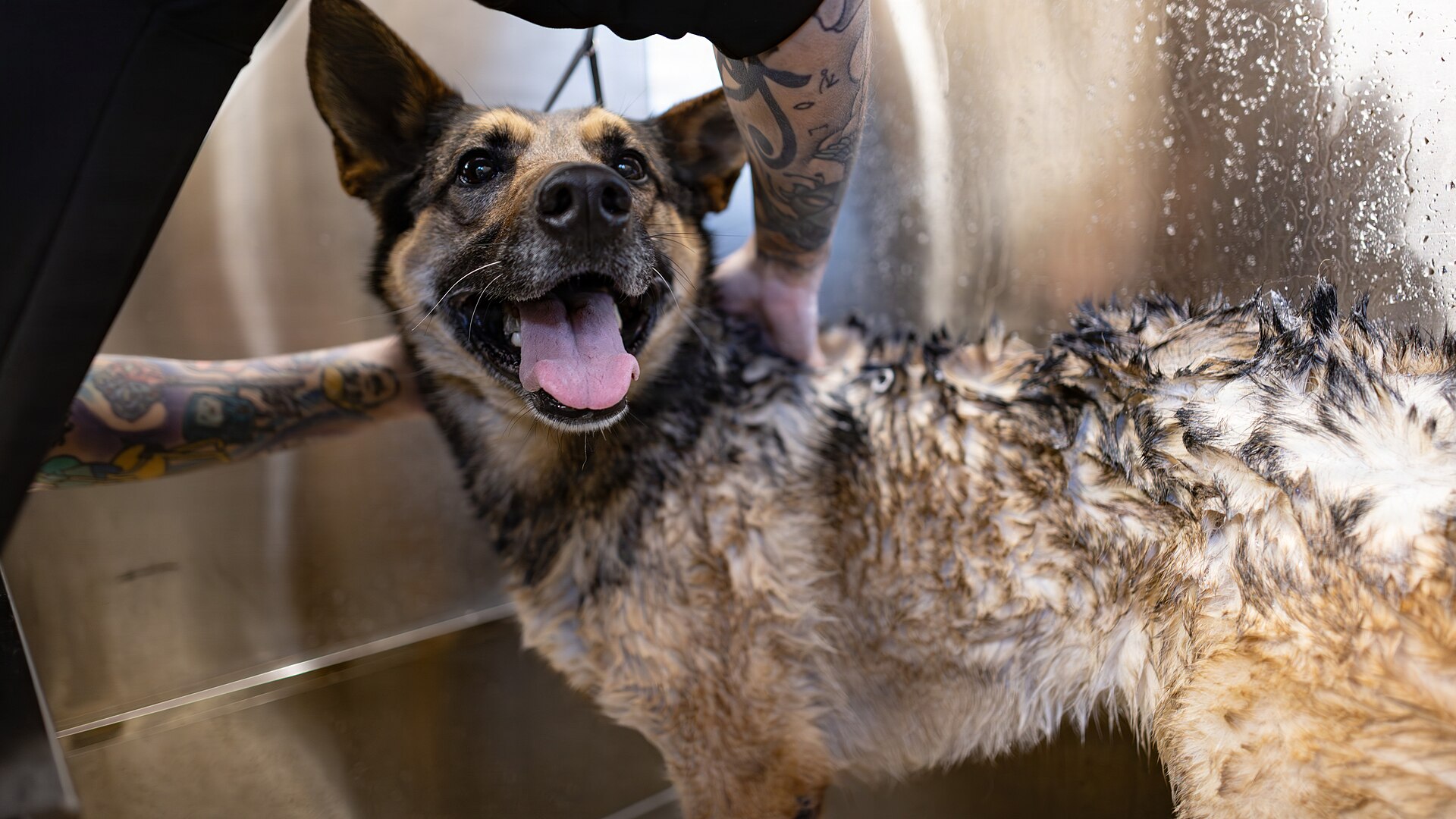
A dog who snaps during nail trims may have a cracked nail or an arthritic toe. A dog who panics when ears are touched may have an ear infection that has been quietly hurting for weeks. Matted coats pull constantly, so a matted anxious dog is often a dog in low-grade pain whose behavior improves the day the coat comes off. Before any behavior plan, a vet check for the anxious dog is money well spent, and groomers see the pattern often enough that the good ones will suggest it themselves.
Age matters here too. Senior dogs develop sore joints, thinner skin and sometimes cognitive changes that make a two-hour groom genuinely hard. Shorter, more frequent appointments, with the dog standing on a padded surface and allowed to sit during parts of the work, are the professional answer, and a groomer who offers that plan unprompted understands senior work.
What a groomer can change
The salon levers are time and sequence. Short appointments first (bath, nails, home) so the dog learns the place predicts brief, survivable events. The same groomer each visit, because familiarity with one person's hands and voice removes a whole category of uncertainty. A quiet slot in the day rather than the Saturday rush, where the dog is not absorbing the stress of twenty other dogs. And work broken into pieces with pauses, which is slower for the salon and faster for the dog's learning than one forced march through a full groom.
Technique matters underneath the scheduling. Experienced groomers read dogs continuously: which ear position means enough, when a break resets a dog and when it lets anxiety rebuild. HydroSurge-style bathing systems that clean without hard hand-scrubbing, gentle natural products for reactive skin, and a low, unhurried voice are small things that stack. Ask a prospective groomer how they handle a dog who is done for the day. The right answer involves stopping, and sometimes splitting the groom across two visits.
Training at home, in minutes
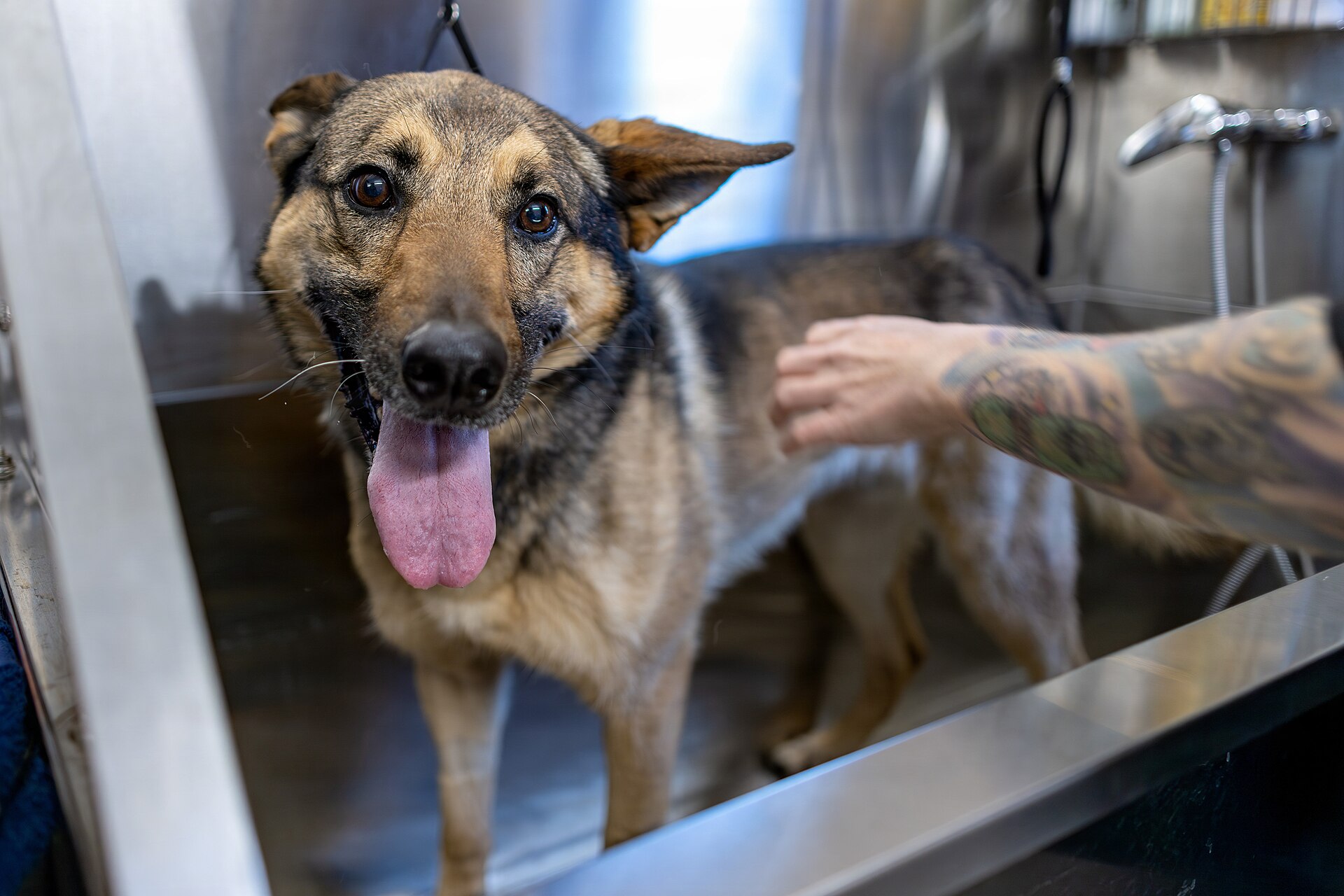
Ten minutes a few times a week outperforms any heroic weekend session. Touch paws and ears and follow with food. Stand the dog on a mat or low platform and reward standing. Run the shower briefly in the bathroom while the dog eats nearby, so water noise joins the list of ordinary sounds. Brush for thirty seconds, then two minutes, always ending before the dog's patience does, because the dog remembers how sessions end.
Skip the flooding approach: holding a panicked dog in a bath until it stops struggling teaches it that struggling is pointless, which is not the same as calm, and it can make the next visit worse. Progress in anxiety work looks boring from outside (a dog standing, eating treats, in a bathroom) and that boringness is precisely the point. You are building a dog who finds the salon unremarkable.
When to bring in the veterinarian
If a dog's fear is severe (panic that does not settle, aggression that endangers staff, self-injury in a crate), the path runs through the veterinarian. Mild situational anxiety sometimes responds to vet-prescribed calming medication given before appointments, and that is a legitimate tool, not a defeat: a dog who experiences grooming while calm learns that grooming is calm, which eventually reduces the need for the medication itself.
Be honest with the groomer about any medication and about bite history. Professionals plan safely around the truth; what they cannot manage is a surprise. An anxious dog with honest information, a pain check, short visits, a familiar groomer and ten-minute home sessions is a dog with a plan, and most such dogs end up groomed on a normal rhythm, wondering what the fuss in the car park was ever about.
Common questions
Should I stay with my dog during grooming?
Usually not. Most dogs are calmer working directly with the groomer, and an owner's presence can raise the stakes for a dog who wants to be rescued. Some salons allow owners nearby for very anxious dogs; ask, and trust the groomer's judgment, since they watch this dynamic daily.
Can grooming medication help my anxious dog?
For genuinely fearful dogs, yes, when prescribed by your veterinarian for appointment days. A dog who experiences the salon while calm learns the salon is safe, so medication can be a bridge to needing it less. Always tell the groomer what was given and when.
How long does it take for an anxious dog to improve?
Most dogs show clear improvement within two to three short, well-run visits, with home handling practice between them. Severe fear takes longer and may need veterinary support. Progress is measured in small steps: entering willingly, settling in the tub, tolerating the dryer.
Photos in this guide are representative stock images.
← All guides from The Doggie Barber← Back to The Doggie Barber