The breed chart on the salon wall covers Schnauzers, Cocker Spaniels, Poodles, and a long list of purebred coats. Then a mixed-breed dog walks in with a poodle's curl on its back, a retriever's straight coat on its legs, and a tail nobody can classify, and the chart stops helping. Most pet dogs in Huntersville are mixes, and their cuts get chosen by coat, not by pedigree.
Groomers at The Doggie Barber match cuts to the breed for purebreds, from a Schnauzer trim to a full groom for a thick-coated Newfoundland. For mixes, the same skill applies in a different order: read the coat first, then pick the style. Here is how that reading works.
Coat type decides more than breed does
Four questions drive the decision. Does the coat grow continuously and need cutting, like a poodle's, or does it shed in seasons, like a retriever's? Is it single or double, because double coats are brushed and de-shed rather than clipped short? How dense is it, and where do mats form first, usually behind the ears, in the armpits, and where a collar or harness sits? And how does the coat behave when wet, since curl that appears in the tub changes the finished length?
A dog can inherit different answers on different parts of its body. That is normal, and it is why a good groomer runs hands and a comb over the whole dog before agreeing on a style, instead of booking the cut from a photo alone.
| What the coat does | Typical mix pattern | Sensible cut approach |
|---|---|---|
| Grows continuously, curly | Poodle crosses, doodle types | Regular clipped or scissored trim on a set schedule; length set by your brushing habits |
| Grows continuously, straight and silky | Yorkie or Maltese crosses | Scissored tidy or a shorter pet trim; daily brushing if kept long |
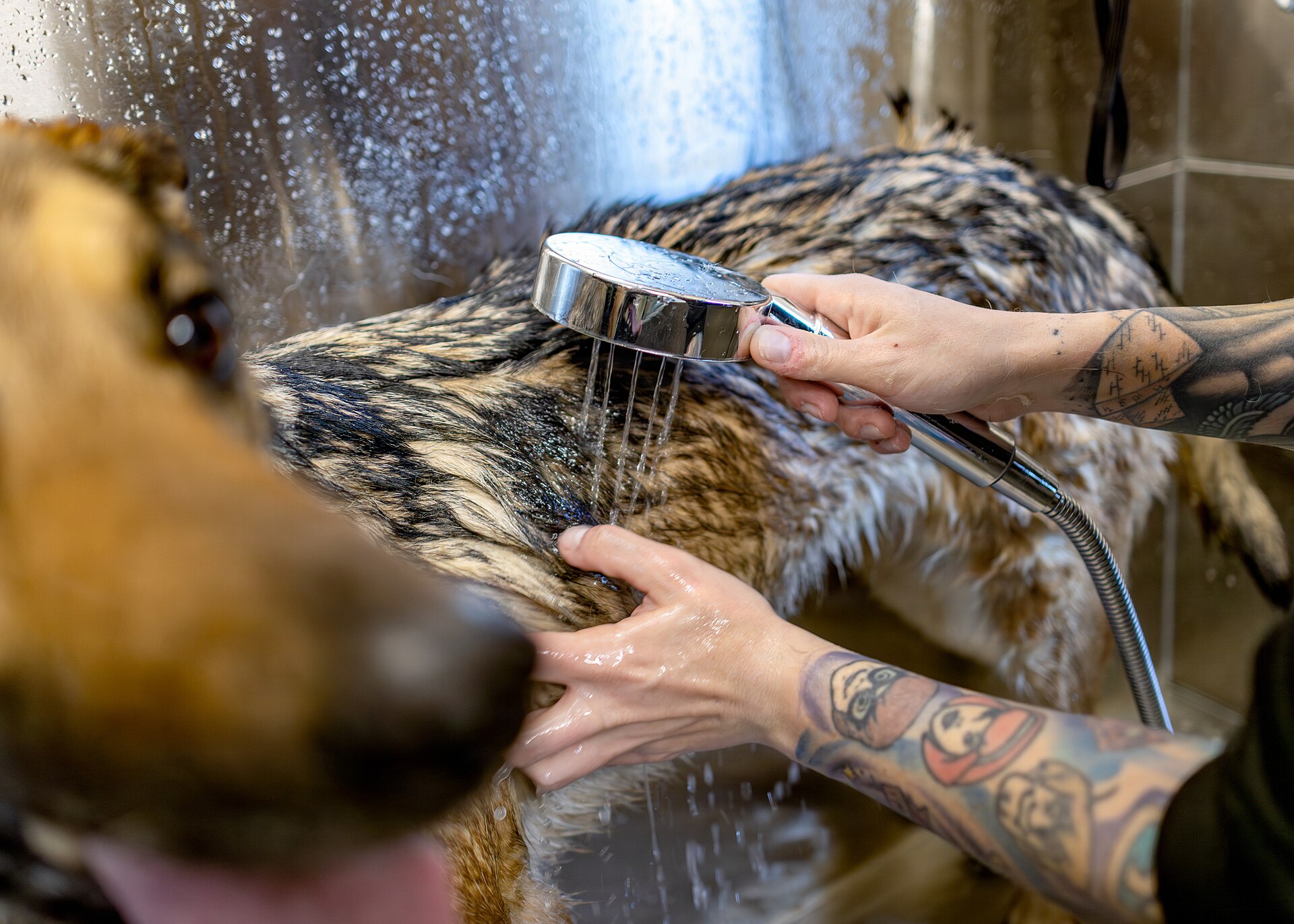
| Sheds seasonally, double coat | Shepherd, husky or retriever crosses | Bath, blow-out and de-shedding; tidy feathers and feet, avoid close clipping |
| Short, smooth, sheds lightly | Terrier and hound crosses with short coats | Usually no length cut; bath, nails, ears and a tidy of stray furnishings |
| Wiry outer coat | Terrier crosses | Clippered pet trim for most pets; hand-stripping only where the coat type suits it |
| Different coats in different places | Many mixed breeds | Blend approaches by area, with lengths that make the joins look deliberate |
Bring a photo, expect a translation
A photo of the style you like helps, with one caution: the dog in the photo has a different coat from yours. A groomer's job is to translate the shape of that photo onto your dog's coat honestly, and to tell you where the translation will differ. A very short, low-maintenance version of a glamorous photo is a legitimate request, and groomers hear it often.
Lifestyle is the other honest input. A dog who swims, hikes, or wears a harness daily, or an owner who brushes twice a month rather than twice a week, needs a shorter and simpler cut than the same coat could theoretically carry. Mats removed at the salon hurt more than length left on the salon floor.
The first cut is a draft
Treat the first appointment as information. Note how the length grows out over the following weeks, where tangles appear, and how long home brushing actually takes. Tell the groomer at the next visit; small adjustments to length in problem areas, a shorter tummy, neater feet, are how a mix finds its standing cut. Most mixes settle into a repeatable style by the third groom, and from then on the appointment runs on rails.
Season changes the answer
The right length in January is not automatically the right length in July. A longer mixed coat carried through winter needs more brushing as indoor heat dries it, and the same coat taken a little shorter for a Piedmont summer of thunderstorms, mud, and lake days dries faster and mats less. Many owners settle on two standing versions of their dog's cut, a winter length and a summer length, and switch between them at the salon. It is a practical compromise that respects both the coat and the calendar.
Common questions
My mix has a double coat. Can it still get a summer trim?
A tidy of feathers, belly, and feet, yes. A close clip is generally avoided on double coats because it can affect regrowth and removes insulation. Ask for a de-shedding bath instead.
How do I describe what I want without breed terms?
Describe length and upkeep: short all over, longer on the legs, face trimmed short, and how often you brush. Bring a photo as a starting point for shape.
Why did the same cut look different this time?
Coat condition, season, and how much matting had to be removed all change the result. A coat that arrives brushed out holds its intended style far better.
Photos in this guide are representative stock images.
← All guides from The Doggie Barber← Back to The Doggie Barber